

Table of Contents
- Gold Vermeil vs Gold Plated: The Quick Comparison
- What Is Gold Vermeil and What Is Gold Plated?
- Gold Vermeil vs Gold Filled Durability: Which Lasts Longer?
- Does Gold Vermeil Tarnish? What Causes Fading
- How to Clean Gold Vermeil Jewellery Without Stripping the Gold
- Skin Sensitivity, Repairs and How to Spot Real Vermeil
- Frequently Asked Questions
Last Updated: September 30, 2026
Gold Vermeil vs Gold Plated: The Quick Comparison
If you have ever watched a favourite necklace lose its shine after a few months, you already know why the question "is gold vermeil better than gold plated" matters. The short answer is yes, in almost every case where longevity counts. Gold vermeil is a legally defined standard: a sterling silver base with a gold layer of at least 2.5 microns, while gold plated jewellery uses a cheaper base metal with a much thinner gold coat.

Here is the comparison at a glance:
| Feature | Gold Vermeil | Gold Plated |
|---|---|---|
| Base metal | Sterling silver (925) | Brass or copper alloy |
| Minimum gold thickness | 2.5 microns | Often under 0.5 microns |
| Typical lifespan | Several years with care | Months of regular wear |
| Tarnish resistance | High | Low to moderate |
| Skin sensitivity risk | Lower (silver base) | Higher (base metal exposure) |
| Price | Mid-range | Budget |
What Is Gold Vermeil and What Is Gold Plated?
Gold vermeil is a precious metal construction: a sterling silver core electroplated with a layer of gold that is at least 2.5 microns thick, and in most quality pieces, 18k or higher. Gold plated jewellery is any base metal, usually brass, coated with a thin gold layer that has no minimum thickness requirement.
The 2.5 Micron Rule That Separates Them
The 2.5 micron threshold is the industry line between vermeil and ordinary plating. A micron is one thousandth of a millimetre, which sounds tiny, but plating thickness is the single biggest factor in how long a piece survives.
Base Metal: Sterling Silver vs Brass
The base metal underneath determines both durability and how your skin reacts. Sterling silver is a precious metal that resists corrosion and holds its structure. Brass is a cost-effective alloy, but it oxidises faster and can release trace metals once the gold layer wears through.
Gold Vermeil vs Gold Filled Durability: Which Lasts Longer?
Gold filled jewellery usually outlasts both vermeil and plating, because its gold layer is mechanically bonded and measured by weight rather than microns. In the durability hierarchy, gold filled sits at the top, vermeil in the middle, and gold plated at the bottom.
Gold-Filled Jewellery Explained
Gold filled jewellery is made by bonding a thick layer of gold alloy to a base metal using heat and pressure, so the gold content typically makes up a meaningful percentage of the piece's total weight. It is more expensive than plating and often harder to find in delicate, fashion-forward designs.
Does Gold Vermeil Tarnish? What Causes Fading
Gold vermeil can tarnish, but the mechanism is different from plated jewellery, and understanding it tells you whether a dull piece can be rescued. Tarnish is oxidation, a chemical reaction between metal and sulphur compounds in the air, sweat, perfume, and cosmetics. On gold plated brass, the thin coating wears away mechanically and the brass beneath oxidises fast, turning dark and sometimes marking skin.
The most common culprits behind fading:
- Perfume, hairspray, and body lotion applied directly onto the piece
- Chlorine and salt water from swimming or bathing
- Sweat sitting on the metal during workouts
- Storing pieces loose together so they scratch each other
- Household cleaning chemicals and abrasive polishes
- High humidity, which accelerates sulphur-driven tarnish on the silver base
- Rubber bands and some elastic hair ties, which contain sulphur compounds that tarnish silver on contact
Surface Tarnish vs Worn Gold: How to Tell Them Apart
This is the check most guides leave out, and it saves you from discarding a piece that only needs a clean.
Elegant real 18k Gold plated oval →
- Surface tarnish looks like a faint grey, brown, or yellowish film. It sits on the surface, wipes away with a soft cloth, and the gold colour returns underneath. This is the silver base reacting through microscopic pores or along edges, and it is fully reversible.
- Worn gold shows as a patch of a different colour, usually a paler silver or a brassy yellow, where the gold has physically thinned. It does not wipe off, and it tends to appear first on high-friction points: the underside of a ring, the clasp of a bracelet, the edges of a pendant.
Why Vermeil Tarnishes More Slowly Than Plating
Two factors do the work. First, thickness: a 2.5 micron gold layer is roughly five times thicker than typical plating, so it takes far longer for wear to expose the base. Second, the base itself: sterling silver oxidises to a surface film that is largely cosmetic and can be polished away, whereas brass corrodes into a darker, more stubborn patina that stains skin.
How to Clean Gold Vermeil Jewellery Without Stripping the Gold
Cleaning gold vermeil safely takes about two minutes and a few basic items. The goal is to lift oils and grime without abrading the gold layer, so skip anything abrasive.
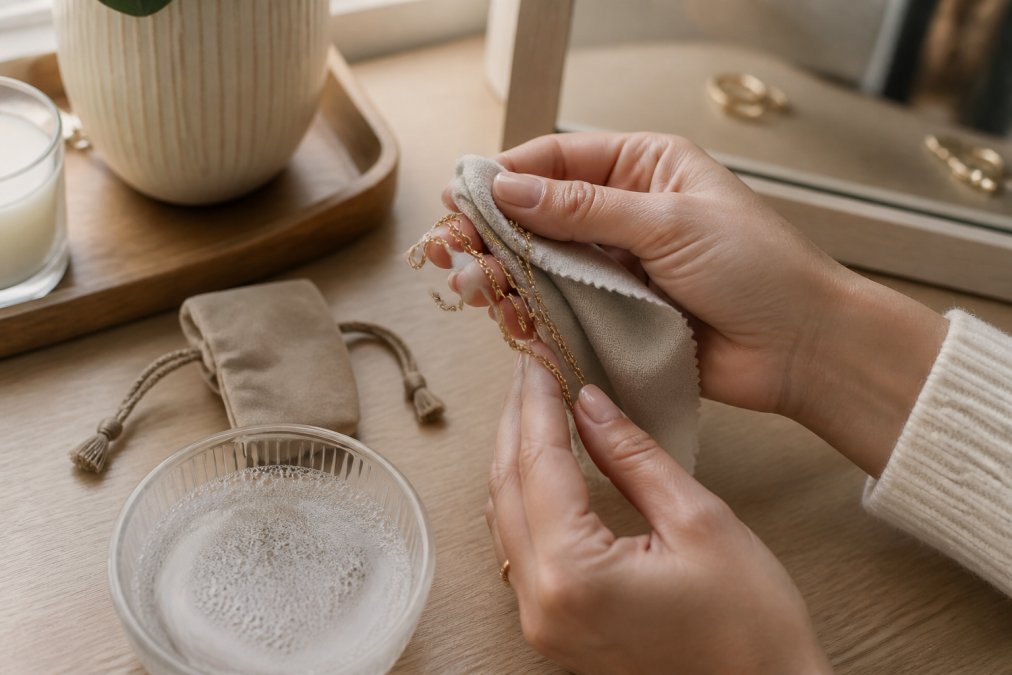
Follow this routine:
- Fill a small bowl with lukewarm water and a drop of mild soap.
- Dip a soft microfibre cloth into the water and wring it out.
- Wipe each piece gently, working along the chain rather than scrubbing.
- Rinse the cloth and wipe again with clean water.
- Pat dry completely, then leave to air for a few minutes.
- Store in a soft pouch, separate from other pieces.
Skin Sensitivity, Repairs and How to Spot Real Vermeil
Skin sensitivity is where vermeil pulls ahead clearly, but the reason is chemical rather than marketing. When a plated brass piece wears through, the exposed alloy can release nickel and copper ions. Nickel is one of the most common contact allergens worldwide, and copper salts are what produce the familiar green or black mark on skin. That discolouration is not the gold coming off, it is the base metal reacting with sweat and acids on your skin.
- Confirm the base metal is sterling silver (925), not brass or a mystery alloy
- Look for explicit nickel-free and lead-free labelling, not just "hypoallergenic"
- Patch-test a new piece on your inner wrist for 24 hours before daily wear
- Avoid plated pieces on piercings and rings, where friction and moisture accelerate wear-through
Re-plating and Repair: The Ownership Question Nobody Answers
This is the question most guides skip, and it matters more than the initial price. Vermeil is genuinely repairable. Because the base is solid sterling silver, a jeweller can strip the worn gold, re-polish the silver, and electroplate a fresh 2.5 micron layer, restoring the piece to near-original condition. The silver core has intrinsic value, so the repair is usually worth doing on any piece you paid a meaningful amount for.
How to Spot Real Vermeil Before You Buy
You do not need a loupe or a lab to separate quality vermeil from ordinary plating. Work through these signals in order:
- Hallmark. Look for a 925 or "sterling" stamp on the piece, clasp, or tag. Under UK hallmarking rules, precious metal items above the legal weight thresholds must be independently tested and stamped by an assay office, so a genuine vermeil piece will usually carry a silver hallmark on the base.
- Stated thickness. Reputable sellers state the gold layer in microns, 2.5 or higher for vermeil. If thickness is not mentioned, assume it is plating.
- Named karat. "18k gold vermeil" tells you the gold alloy used. "Gold tone" or "gold colour" tells you nothing and usually signals plating.
- Weight and warmth. Sterling silver is denser than brass. A vermeil piece of a given size will feel noticeably heavier and, in the hand, warmer and less brassy in tone.
- Colour depth. Vermeil tends to hold a deeper, richer gold with less of the yellow-orange cast you see on thin plated brass.
- Price sanity. Silver has a real metal cost. A price that undercuts every other vermeil piece on the market is almost certainly plating with a vermeil label.
Frequently Asked Questions
How long will gold vermeil last?
With careful wear, gold vermeil pieces typically hold their finish for one to three years, and longer if the plating is thick and you keep them away from perfume, chlorine and abrasive cleaners. Pieces worn daily against skin, such as rings and bracelets, wear faster than necklaces or earrings. Storing each item in a dry pouch and wiping it after wear slows the fade considerably.
What are the disadvantages of vermeil?
Gold vermeil costs more than standard gold plating because it uses a sterling silver base and a thicker gold layer. It is still not solid gold, so the finish can wear through at high-friction points over time, and re-plating is usually needed rather than a simple polish. It also needs more careful handling than gold-filled or solid gold pieces.
Does gold vermeil tarnish?
Yes, gold vermeil can tarnish, though slower than thin gold plating. The sterling silver underneath reacts with sulphur, moisture and chemicals in perfume or cleaning products, which is why the gold layer eventually dulls or darkens. Keeping pieces dry, storing them in an airtight pouch and cleaning them gently with a soft cloth keeps tarnish at bay for much longer.
How can you tell the difference between gold plated and gold vermeil?
Check the hallmark or product specification. Vermeil must carry a sterling silver base, at least 2.5 microns of gold and a gold purity of 10 karats or higher; anything thinner or on a brass base is simply gold plated. Visually, vermeil usually has a warmer, deeper tone and a heavier feel, while thin plating looks brighter and can show a grey or yellow base metal at the edges as it wears.
Is gold vermeil safe for sensitive skin?
Vermeil is generally the safer choice for sensitive skin because the sterling silver base and thicker gold layer create a stronger barrier between your skin and any alloy metals. Nickel is the most common trigger for reactions, so look for pieces labelled nickel-free and lead-free. If a piece still irritates your skin, the plating may have worn thin and exposed the base metal underneath.